
Controllers, also known as weight indicators or displays, are the brains behind any weighing system. Whether you’re running a small retail operation or managing a complex industrial process, these devices transform raw sensor data into meaningful information that drives decision-making. Without them, scales and weighing equipment would simply be mechanical structures with no way to communicate what they’re measuring.
Understanding what controllers can do helps businesses choose the right equipment for their needs. From straightforward weight readouts to sophisticated automation that manages entire production lines, these devices vary widely in capability and application. We’ll explore how controllers handle basic display functions, manage process control, collect and analyze data, connect with other systems, and support advanced industrial applications.
Basic Weight Display and Monitoring
At their most fundamental level, controllers display weight measurements in a format operators can read and understand. This seems simple, but even basic displays must accurately convert electrical signals from load cells into precise weight readings, accounting for factors like temperature drift and environmental interference. The display needs to be clear, easy to read from a distance, and update quickly enough to be useful in real-time operations.
Modern controllers offer multiple display modes and unit conversions. An operator might need to switch between kilograms and pounds, view gross weight versus net weight, or see the current reading alongside a target weight. These features make controllers versatile across different applications and user preferences. Some displays include backlighting for low-light environments, while others feature large digits for warehouse settings where visibility from several meters away is essential.
Basic controllers also handle tare functions, zero calibration, and simple threshold alerts. When a tare button is pressed, the controller records the current weight and subtracts it from subsequent readings, allowing users to measure only the material added to a container. Zero calibration ensures accuracy over time, while threshold alerts notify operators when weights exceed or fall below predetermined limits. These fundamental functions form the foundation for more complex controller applications.
Process Control and Automation
Beyond simple display, controllers manage automated processes that require precise weight-based decisions. In batching operations, controllers direct valves and gates to open and close at specific weights, ensuring each batch contains exactly the right amount of material. The controller monitors the weight in real time, accounts for material in flight (the amount still falling after a valve closes), and makes split-second adjustments to maintain accuracy across thousands of cycles.
Weight-based control systems are essential in industries where consistency directly impacts product quality. Food manufacturers rely on controllers to maintain recipe specifications, ensuring each package or batch meets regulatory requirements and customer expectations. Chemical processing plants use controllers to blend materials in precise ratios, where even small deviations could compromise safety or product performance. The controller becomes the central hub that coordinates multiple inputs and outputs based on weight data.
These automated functions often include programmable logic that handles complex sequences. A controller might manage a multi-ingredient batching process, calling for each material in turn, verifying weights at each step, and halting operations if discrepancies occur. This level of automation reduces human error, increases throughput, and provides consistency that manual operations struggle to match. The controller essentially functions as a dedicated computer optimized for weight-based process management.
Data Collection and Management
Modern industrial operations demand detailed records, and controllers serve as critical data collection points. Every weighing event can be logged with timestamps, operator identification, batch numbers, and other relevant metadata. This information supports quality control, regulatory compliance, and operational analysis. Without reliable data collection at the weighing stage, businesses lack visibility into their processes and struggle to identify improvement opportunities.
Controllers store this data internally or transmit it to external databases and management systems. Historical weight records help identify trends, such as gradual drift in machine performance or patterns that correlate with quality issues. Managers can review daily production totals, compare operator performance, or investigate specific batches when customer complaints arise. The controller transforms what would otherwise be ephemeral weight measurements into permanent records that drive business intelligence.
Data management features in weight controllers also support traceability requirements common in regulated industries. Pharmaceutical manufacturers must prove exact amounts of active ingredients in every batch. Food processors need to demonstrate compliance with portion control regulations. Mining operations track material movements through multiple weighing points. Controllers equipped with robust data management capabilities make these compliance requirements manageable, generating reports and audit trails automatically rather than relying on manual record-keeping.
Integration and Connectivity
Controllers rarely operate in isolation. They connect with enterprise resource planning systems, manufacturing execution systems, warehouse management software, and other business applications. Through standard protocols and interfaces, controllers share weight data across organizational systems, enabling coordinated decision-making. An inventory management system might automatically reorder materials when a hopper weight falls below a threshold, or a shipping system might generate bills of lading based on truck scale data.
Network connectivity allows controllers to communicate with each other and with central monitoring stations. A processing plant might have dozens of weighing points, each with its own controller, all reporting to a supervisory system that coordinates production. Wireless connectivity eliminates the need for extensive cabling in facilities where scales are spread across large areas or in locations where running wires would be impractical. Remote access capabilities let technicians diagnose issues, adjust parameters, or review data without traveling to the physical location.
Modern connectivity also enables advanced features like remote calibration verification, automated alerts for maintenance needs, and integration with mobile devices. Operators can receive notifications on smartphones when urgent situations arise, review weight data from tablets while walking the production floor, or access historical records from any networked computer. This connectivity transforms controllers from standalone devices into nodes in an integrated operational ecosystem.
Advanced Applications in Modern Industry
Sophisticated controllers support applications that push the boundaries of what’s possible with weight-based systems. In motion weighing, controllers must calculate accurate weights while vehicles or conveyors are moving, filtering out vibration and dynamic forces to extract true weight data. Belt scale controllers continuously measure material flow on conveyors, integrating these measurements over time to determine total quantities moved. These applications require advanced signal processing and mathematical algorithms beyond basic weight display.
Controllers also enable predictive maintenance by monitoring load cell performance characteristics. Subtle changes in signal patterns can indicate developing problems before they cause failures. Some controllers analyze these patterns automatically, alerting maintenance teams to potential issues. This proactive approach minimizes unexpected downtime and extends equipment life by addressing problems in their early stages.
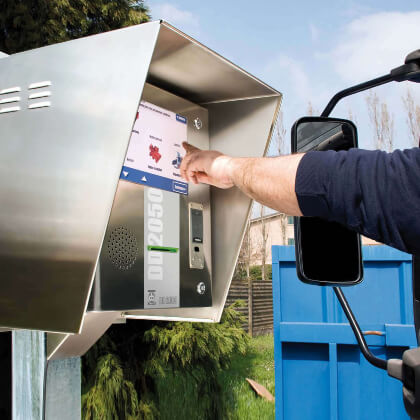
In unmanned operations, controllers manage complete weighing cycles without human intervention. Truck drivers can use self-service terminals where the controller guides them through the weighing process, captures vehicle information, prints tickets, and opens barriers automatically. The controller becomes the interface between the human user and the automated system, handling everything from initial identification through final documentation. These applications demonstrate how weight controllers have evolved from simple displays into sophisticated industrial computers.
In Conclusion
Controllers are far more than weight displays. They function as process managers, data collectors, communication hubs, and intelligent systems that enable modern industrial operations. From basic applications that simply show weight to complex automation that manages entire production processes, controllers adapt to virtually any weighing requirement. Their capabilities continue to expand as technology advances, incorporating connectivity, artificial intelligence, and sophisticated analytics.
Whether you need straightforward weight indication or a comprehensive system that integrates weighing with broader operational control, choosing the right controller is critical to success. At Sasco Africa, our range of digital weight indicators from leading global manufacturers like Bilanciai, Rice Lake, and Systec handle everything from the most basic to the most complex tasks. From simple displays to equipment that controls entire automated processes via wireless networks or unmanned driver terminals, we offer proven technology for Africa’s industrial needs. Get a quote today and let our team help you select the perfect controller for your specific application.

We specialise in commercial and industrial weighing solutions across a wide range of industries. If you would like to use our services, contact us today for a free quote or to get your questions answered by our weighing experts.